What We Notice, We Begin to Care For
There was a battered piece of plastic on the beach. I could have walked straight past it. Instead, I stopped. The writing looked Arabic. Maybe it had washed down a river years ago, crossed an ocean and arrived with the last storm. Maybe it hadn’t travelled far at all. I couldn’t know where it came from, but I could see where it had ended up.
I picked it up.
When I walked Pokes, I’d carry a poo bag for her and another for rubbish. I still love seeing dog owners do the same. Once you start noticing what’s on the ground, it becomes harder to walk past it. And I’ve been wondering whether that’s where caring begins: with paying attention.
I think about personal responsibility a lot. If I’m tired, bloated, anxious or unwell, I look at what might be going on in my life: my food, movement, thoughts, rest, boundaries and choices. I put on a hat when I’m going to be in the sun. I pay attention to what I put in my fridge. I try to do what’s within my power instead of assuming someone else will sort everything out for me.
Of course, taking responsibility doesn’t mean every symptom is my fault, or that I can fix everything myself. Sometimes I need a professional, treatment, rest or help from someone who knows more than I do. What matters to me is staying curious about the whole picture.
I think we lose something when we talk about the mind and body as though they live in separate houses. What I think can affect how I feel; what I feel can show up in my body. When I’m stressed, I notice it in my breathing, my gut and the way I move through the day. Slowing my breath doesn’t magically solve what’s troubling me, but it can help me settle enough to listen.
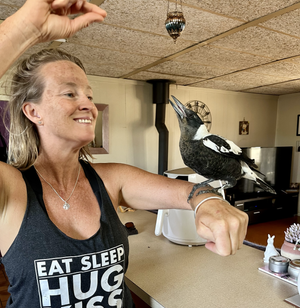
And when I slow down enough to listen to myself, I tend to notice more of what’s around me too. The bird I might have missed. The person trying to tell me something. The plastic at my feet.
Then I look at the planet and wonder why we act as though we live separately from it.
Forests burn. Oceans fill with plastic. Weather patterns seem off their nut. It’s easy to point at governments, corporations and systems, and there are good reasons to hold them accountable. Their decisions shape what gets made, sold, protected and destroyed. But I buy things too. I use transport. I throw packaging away. I do my best to understand the story behind what I buy, though I know I don’t always have the full picture.
When did we start imagining our responsibility ends at our own front door?
When I was teaching, I used to ask the kids to open their lunch boxes and think about everyone who’d helped get their food there. With the little ones, we’d talk about farmers, shop workers and truck drivers. As they got older, we’d go deeper. Who made the packet? Who grew the ingredients? Who built the machine that made it? Some labels looked as though we needed a bioengineer to decipher them. Absolutely wild.
I tried the exercise again just now with ChatGPT, using a small packet of salted Smith’s chips as an example. Someone grew the potato, with help from people who developed the seed, maintained the machinery and drove the harvest to a factory. Other people supplied the oil, salt and packaging, ran the production line, checked the chips, printed the packet and packed the boxes. Then came warehouse workers, truck drivers and supermarket staff before I could buy it. One little packet of chips, and so many hands I’ll never meet. Smith’s says its potato chips use Australian grown potatoes. Imagine how much further the story might stretch for some of the other things on our shelves.
I could also buy an apple directly from a farmer at the market down the road, or chips made locally. That choice has a story too. I’m not pretending every local product automatically has a smaller footprint, or that I’ll never buy a packet of Smith’s chips. I just want to remember that my choices reach further than I can see.
I’ve been thinking about that in my work, too.
I joined LinkedIn recently out of curiosity, not because I’m looking for a job. I’m playing with what Adventurous Souls could become: a place to explore the human side of guiding, to work with people whose lives don’t fit a neat nine-to-five, and to share my writing. If someone wants to offer me a book deal while I’m there, I won’t complain!
I’ve also started following Intrepid, the company I’ve guided for since COVID. I don’t watch much news, and I keep it off my socials, so I’ve liked seeing more of what the company is doing behind the scenes. Intrepid became a certified B Corp in 2018. It uses locally based leaders, supports community tourism experiences and matches traveller donations to The Intrepid Foundation. In 2025, the Foundation distributed $3.4 million to communities around the world. The company has also announced an annual $2 million Climate Impact Fund from 2026.
I have a lot of respect for the founders. They entered a partnership with TUI in 2011, then took back ownership of the Intrepid brand in 2015 because their values didn’t align. I can’t know every conversation behind that decision, but I admire the intention they’ve continued to put into the kind of travel they want to create. Travel has an impact, even when we try to do it well. I want to work for a company willing to look at that impact and keep asking what it can do better.
I want to ask that of myself as a guide, too. I’m not just a chauffeur taking people from one photo stop to the next. I want their minds blown. I want to see the curiosity of a toddler unlocked and awe take over their world. If a location is a bit average that day, I hope the connections and conversations still make them smile and feel glad they came.
I’ve realised the best thing I can give guests isn’t a perfect explanation of every place we visit. It’s an invitation to notice for themselves: to ask questions, spot wildlife they might have walked past, listen to a local person’s story, or recognise that a beach is a living place rather than a backdrop. I’d love for some of that curiosity to stay with them after the trip ends. I’d love for them to go home and see the beauty in their own streets. To stop and watch birds nesting in a local tree, or take a late-night drive to stare at the stars above their own town. Beauty is everywhere, not just on holidays.
That curiosity can turn inward as well. A guest might notice how different they feel after a day outside, a good conversation, or a moment when they put their phone away and really looked around. I can’t tell them what to make of that. I can create space for them to notice it for themselves. That’s part of what Adventurous Souls means to me: exploring our inner and outer worlds together, because we carry ourselves into every place we go.
I see that same attention in people planting trees, restoring soil, protecting waterways, cleaning beaches and caring for local ecosystems. They’re my people, and I’m happy to share their work. There are so many grassroots groups worth supporting, from beach clean-ups and coral restoration to turtle protection, Caring for Country and managing invasive species.
One I often mention to guests is Take 3 for the Sea. The pocket of my backpack generally fills with rubbish while I’m taking groups on walks. I don’t always say anything. I pick something up, and often guests start picking things up too. Take 3’s invitation is simple: take three pieces of rubbish with you when you leave a beach, waterway or anywhere else. It asks me to see what’s at my feet, bend down and do something. Then I can look up and ask what else needs to change.
I can consume less. Walk when it makes sense. Support a local project. Ask where something came from. Think twice before buying shit I don’t need. On tour, I can pay attention to what a community asks of visitors, pick up rubbish even when it isn’t mine, shop local, and remind guests to turn off the lights and air con when they leave their rooms. I can help them notice the places we pass through as places they have a relationship with, however briefly.
I don’t believe healing myself will automatically heal the planet, though imagine what might change if more of us paid attention to both. When I notice what I need, I can show up with more care for the people around me. When I remember all the hands behind my lunch, strangers feel less distant. When I pick up a piece of plastic, the beach feels less like somewhere I visit and more like somewhere I belong.
Our inner and outer worlds keep meeting in moments like these. What I notice changes how I move through a place. How I move through it changes what I leave behind.
That’s the kind of guide I want to be. I want guests to go home looking for the birds in their own trees, the stars above their own streets, the people behind the things they buy. And yes, the rubbish at their feet. Because if I can help someone notice more of the world, perhaps they’ll find more of it worth caring for.