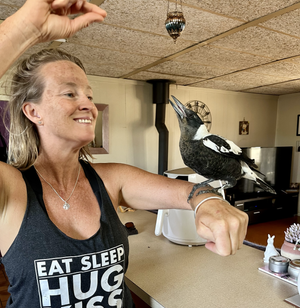
What Co-Guiding Reminded Me About Myself
It was interesting working with another guide again; it’s been a while. I noticed things that would’ve triggered the crap out of older versions of Rach. Little things like being told how to fold a groundsheet.
The great thing was, I didn’t actually get triggered. I noticed that I could’ve been. I noticed that an older version of me probably would’ve been. But this time I could just take a breath and laugh on the inside, because I knew he was just trying to be helpful.
He was a super lovely guy, very considerate and caring. People in this industry are generally amazing people in so many ways, but we are all still human. His groundsheet moment wasn’t coming from a place of ego or control, for me to get annoyed would’ve been a waste of my own energy and time. That felt like growth right there!
I gave myself a little pat on the back for that one, which isn’t something I’m particularly good at. I don’t often celebrate my achievements. Certificates go into drawers unopened and trophies get thrown in the bin. But this week I acknowledged my growth! He didn’t annoy me once!!! Actually, not many people annoy me for long anymore. It’s a beautiful place to be.
Maybe that’s one of the weird things about personal growth. Sometimes it isn’t some huge breakthrough. There isn’t always a ceremony, a certificate or a dramatic moment where you realise you’ve changed. Sometimes somebody tells you how to do something, you feel the ‘WTF?’ coming, then you just take a breath and do the thing.
Working so closely with another person also gave me a really clear mirror, surprising how clear because we were covered in red dirt! I’m used to guiding solo, where it’s all on me. I check the things, ask the questions, manage the logistics, get to know the guests and carry the little mental checklist that runs constantly in the background.
But this time I was co-guiding. And because I fully trusted the person I was working with, I noticed myself letting some things go. Sometimes that’s probably healthy. Other times I think I let another person, or my own mind, override little moments of intuition.
Like when he grabbed tomatoes and I was about to say, “Don’t we have tomatoes?” But I didn’t, because surely he knows what we have. We had tomatoes, and we donated a bag to another camp.
I said, “Do we need coffee?” He said we should be fine. I ran out of coffee for the drive back! Old me might’ve been cranky about this, but instead I hit up another camp and they made me coffee.
None of this is a reflection on him. It’s 100% a me reflection. Me, me, me!! It was super interesting watching the little thoughts pop up in my own mind and noticing when I followed them and when I didn’t. Maybe it was laziness on my behalf because, just for once, it wasn’t all on me. Maybe it’s simply what happens when you’re sharing responsibility with another capable person.
It reminded me of something an old boss used to say: “If it’s worth a thought, it’s worth some action.”
There were other moments too. Things I would normally have checked at the beginning of a trip, I didn’t check because there was another guide there and I assumed they were covered. Most of it was fine. But then the sat phone wasn’t working, and I got annoyed with myself for not checking it. Not annoyed at him for saying we had one. Annoyed at myself because the thought had crossed my mind to check it, and I didn’t act on it. The sat phone was working, by the way, it just needed to be taken apart and put back together!
That became another interesting lesson. Trusting another person doesn’t mean abandoning your own intuition.
After working in a few different industries, and also with people with diverse needs, I’m pretty big on human behaviour and acknowledging people’s quirks.
We had a guy on our tour with a bizarre dietary note. It didn’t really make sense, and had I checked him in myself, I probably would’ve dug deeper. I think when something makes us feel like we need more information, we need to be willing to ask the extra question and get to the root cause before heading off-grid. People are already outside their comfort zones, so we need to make sure we’re doing what we can to help where we can.
It’s easy to say, “Well, it’s their responsibility to tell us.” And yes, it is. But being able to notice something, ask better questions and hopefully manage it before it goes to shit is also a skill worth learning. Be warm and clear at the welcome meeting and give people a chance to have a chat before you head off.
If you notice someone limping, taking pills, struggling physically, or behaving in a way that makes you wonder if there’s more going on, even if they say they’re fine, get to know them. Ask the question. If you’ve nurtured a good relationship with your group, people will generally feel more comfortable opening up.
You might get some really important information. Sharing it with you might make them feel better, and it might also give you better tools to support them along the way if that support becomes necessary.
People don’t always volunteer information clearly. They might be nervous, embarrassed, trying not to be a burden, or simply not realise how relevant something could become once they’re tired, hot, hungry, dehydrated or a long way from help.
That doesn’t mean we need to interrogate people or assume something is wrong. It just means paying attention.
Good guiding isn’t only knowing where we’re going and keeping the trip running on time. A lot of it is noticing people well enough to ask the right question before the answer becomes urgent.
The whole groundsheet story wasn’t an issue at all. It was me noticing an old trigger from an old version of myself. I hated being told what to do. Teenage me would get mad if someone even offered to help me with something I obviously knew how to do. Teenage me was a nightmare! And she definitely would’ve been shitty if someone told her how to fold a groundsheet.
I KNOW how to fold a sheet. I’m not an idiot!
Trigger. The word gets thrown around a lot these days, sometimes as though being triggered automatically means somebody else has done something wrong. But at its simplest, a trigger can spark an emotional reaction that feels much bigger or faster than the situation in front of us. REACTION is the interesting word for me. It can happen before we’ve had time to stop, think and choose a response.
I think we often talk about being triggered as though someone else has caused something inside us and is therefore responsible for how we feel. Sure, sometimes people absolutely behave badly, cross a boundary, or a situation genuinely needs to change. But other times someone simply shines a light on something that already lives inside us. And that part is ours to own, breathe through and release.
I actually love being triggered these days. It shows me what I can release next. What exactly am I reacting to? What story have I attached to what was just said? Is this person actually trying to control me, or is that something I’ve experienced before? Is this about what’s happening now, or is an older version of me standing in the room too?
Working closely with someone can make those things really obvious. I’m not in a relationship at the moment, so working, travelling, camping, problem-solving and making decisions alongside another person for a couple of weeks felt like a little flash into one, and I loved it.
You get to notice yourself in close quarters. How do I behave when I’m tired? What happens when somebody does something differently from the way I would? Do I speak up? Do I assume? Do I trust? Do I overrule myself? Do I make another person responsible for something that actually belongs to me? And can I tell the difference between a real boundary and an old wound?
That last one is a big one. If we blame the world around us for every reaction we have, we give away a lot of our own power. But if we can pause long enough to notice what’s actually happening, maybe we’ll get to see the change we’ve already made.
That’s what the groundsheet moment gave me. Not a trigger. Proof that an old one had lost its power. Also, it’s just a frickin’ groundsheet!
The trip also reminded me how much knowing myself matters when I’m guiding. I probably wouldn’t do back-to-back camping trips because I love fresh food and I really don’t enjoy daily wraps, bread, pasta or rice, and I don’t eat meat. The fish was great up the Cape, but if I see another chip in my life it’ll be too soon.
I know I get a little snappy, or people start becoming annoying, when I’m dehydrated. I actually think a lot of people who think they’re hangry are probably dehydrated. I know I am a better guide with daily electrolytes, morning meditation and even just a short amount of time on my yoga mat.
Those things were harder to fit into a camping trip. Not impossible, and if I ever chose to do a whole season, I’d find a way to fit them in. But as this was just a couple of weeks, I let some of it go.
The reality is that our natural rhythm is probably going to be different from a tour rhythm, so part of guide life is finding ways to adapt without completely abandoning the things that keep us feeling like ourselves. It’s important to know what those things are. Personally, I don’t usually eat after 4pm and I don’t tend to have coffee until around 9am. Neither of those things works particularly well with a normal tour schedule!
I also LOVE and appreciate no questions before coffee. When I’m not working, I don’t even have coffee straight away, but waiting two hours isn’t always doable on a camping trip, so we adapt to the trip. I told the group that I’d appreciate no questions (unless they were an emergency) before coffee!
Years ago, when I guided in Turkey, we lived on a boat and the rule was stated at the welcome meeting: “No questions until I have dived off the edge of the boat for my morning swim, come back up and had my coffee!”
Nothing wrong with healthy boundaries. Say them nicely and people will generally respect them. But don’t wait until you’re about to snap to tell people what you need. By then, you’re reacting, and you could’ve introduced the boundary earlier. That never goes down well!
Maybe that’s part of knowing ourselves too. Not expecting the world to read our minds or blaming people for stepping on boundaries we never actually communicated. Not giving away our intuition because someone else is capable or making every trigger someone else’s fault. Let’s not waiting until we’re exhausted, dehydrated and coffee-less before finally admitting what we need, by then we’re in fight or flight and that’s never an ideal time to communicate lovingly!
We’re human, we’re going to make mistakes, miss things, forget things, react badly sometimes, make the wrong call, or realise afterwards that there was a better way to handle something. It’s important to be willing to reflect. What worked? What didn’t? What could I have done differently? What would I repeat next time? What would I change? Was there a moment I ignored my intuition? Was there something I could have communicated earlier? Did I make someone else responsible for something that was actually mine to manage?
And if you’re unsure, ask for support. Chat to an Ops Manager, get a second opinion, ask for advice. If you work for the company I work for, after-hours support is always there, and it’s run by people who actually know what it’s like to be out in the field. Sometimes another experienced person can see something you’ve missed simply because they’re not standing in the middle of it with you.
Reflection isn’t about beating ourselves up, it’s how we get better.
Guiding, like everything involving humans, is messy. You can be experienced, capable and really good at your job and still get things wrong. The goal isn’t perfection, it’s awareness, adaptability, knowing when to ask for help, and being willing to learn from what happened.
Sometimes growth looks profound. Other times it looks like boundaries, electrolytes, asking the question that popped into your head, owning the thing you could’ve done better, calling Ops when you need another brain on it, and folding the groundsheet the way you’re told to with a smile!
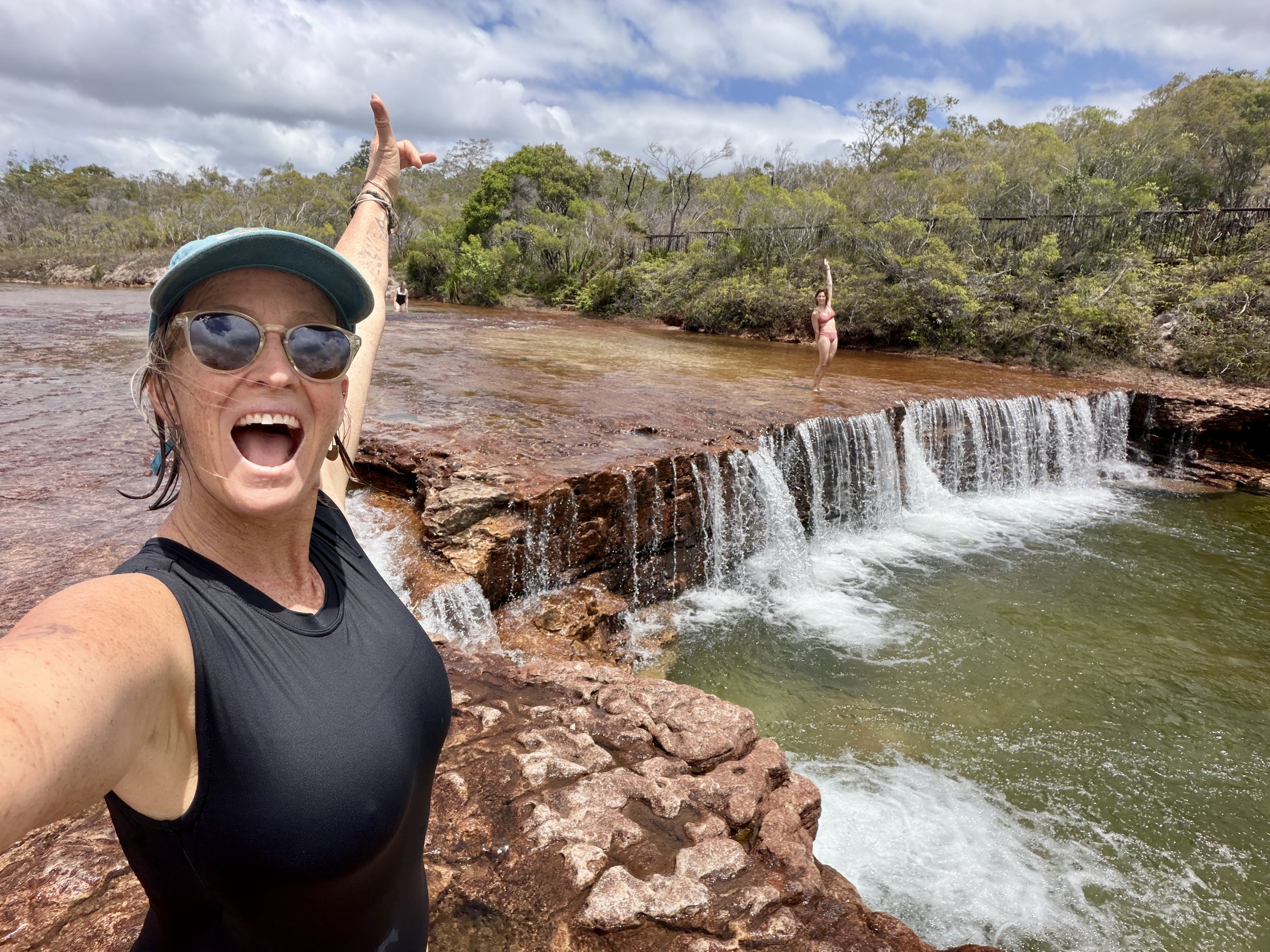
Fruit Bat Falls; Lunch prep can wait!