Tour Guiding Isn’t Just a Highlight Reel
When we become tour guides, we don’t always realise just how much work and responsibility we’re signing up for. We think we’re signing up to travel, meet people, see beautiful places and get paid to have adventures. Of course, that’s part of it. A very real and wonderful part of it.
But we’re also signing up for planning, organising, logistics, long days, bus breakdowns, managing budgets, difficult guests, paperwork, early starts, late finishes, problem-solving, emotional labour, risk management and that strange little 24/7 work mode that will take over your nervous system if you’re not careful.
Guiding is incredible. It really is. Aside from all the work the guests don’t see, we bring the good times, the connection and the magic while they are on the trip of a lifetime.
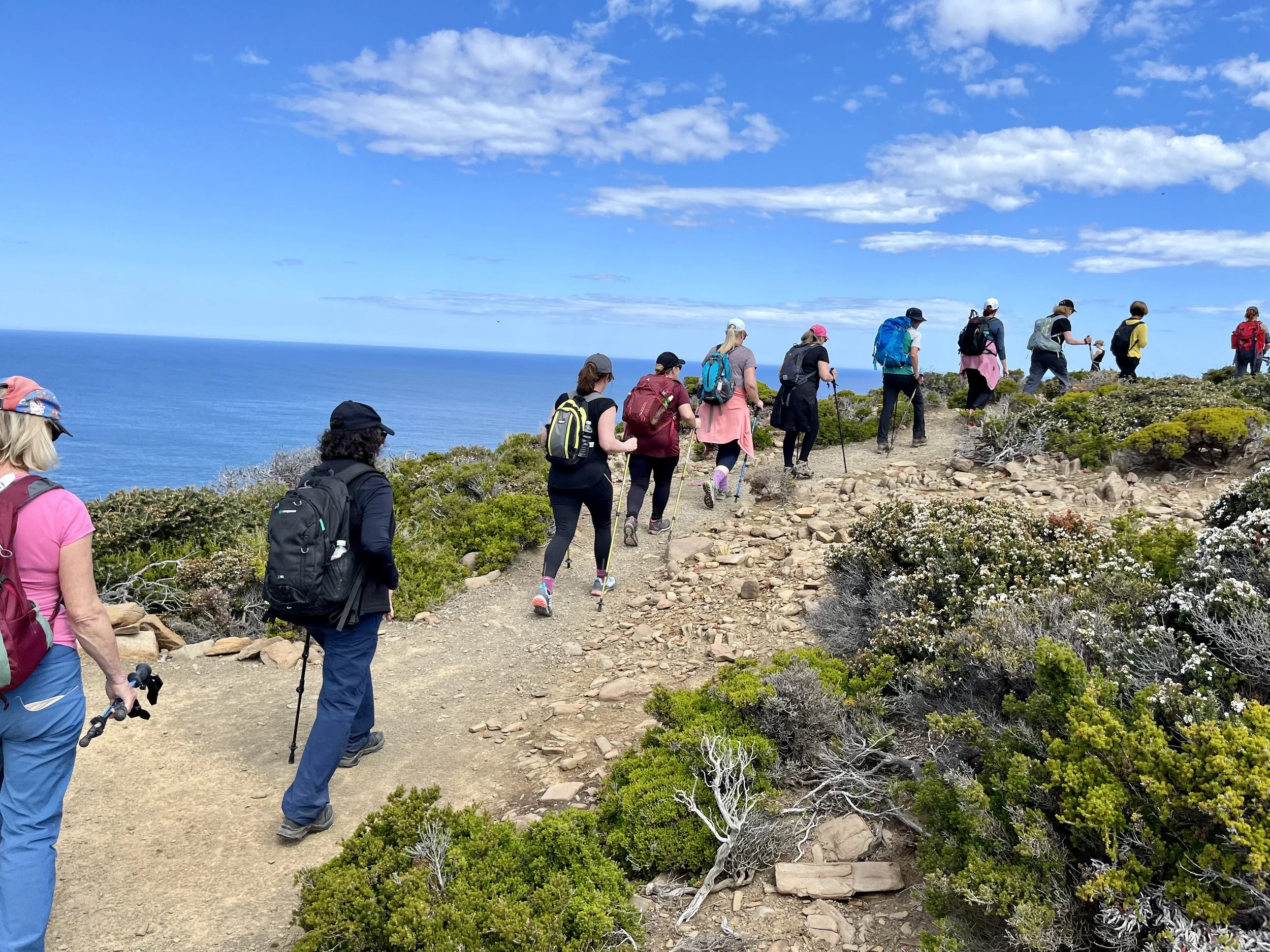
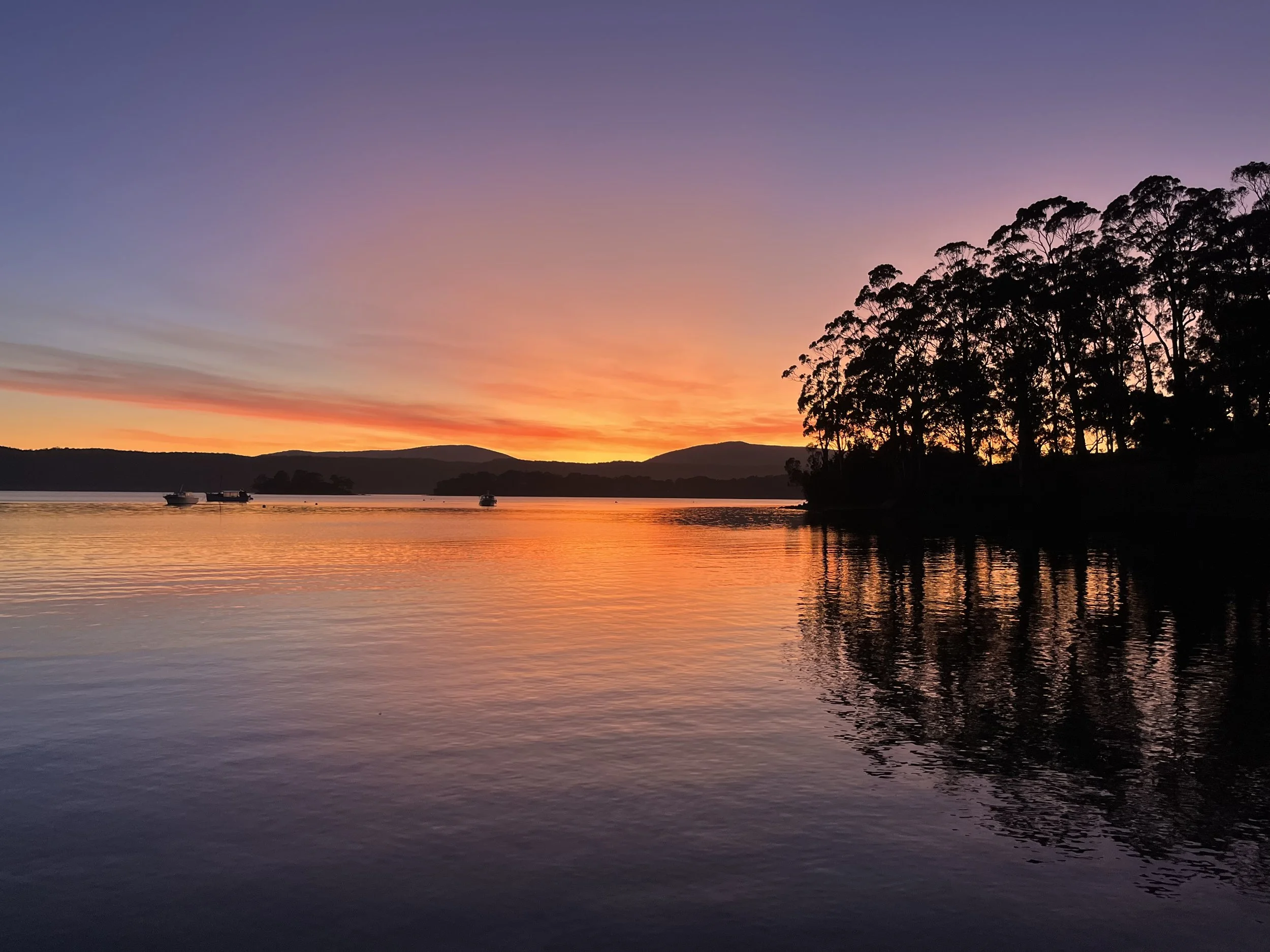
We get to take people on holidays, climb mountains, sleep under the stars, dive under the ocean, walk through rainforests, watch sunsets, share meals, laugh at ridiculous things and show people the beauty of our countries. We get to spend quality time with First Nations guides, who often become friends, teachers and some of the most important people we meet on the road. And we get to help people experience places in deeper, more meaningful ways.
We play a really big part in creating memories for people. Proper memories. The kind they’ll talk about for years. That holiday where they did something they maybe never thought they would do, like travel solo or snorkel the Great Barrier Reef. We encourage moments where people get to feel brave, connected, alive, silly, moved and challenged. We witness growth and change in some of the most courageous ways.
Who doesn’t love a wholesome holiday? One where you come home with stories, new friends, a sun-kissed nose, dirty feet, sore legs, a full heart and maybe a slightly different way of seeing the world.
The job isn’t just a highlight reel though, and guide burnout is real, especially for those who don’t know how to manage their own energy.
There’s no one type of person who becomes a guide. There are the young ones who want to be paid to travel. That’s how I started. There are the older ones who wish they had lived more of their life sooner, but know it’s never too late. The outdoorsy ones, the practical ones, the wild ones, the calm ones, the walking encyclopaedias, the ex-mechanics who know everything about rocks and engines but don’t always realise not everyone wants to be called “love” anymore.
There really are all types.
It’s luck of the draw who you get to run your trip. What doesn’t change is that it takes dedication to be a guide. It’s definitely not for the faint-hearted. People will burn out or leave very quickly if they’re not set up for the reality of the job, both from a practical perspective and a personal one.
It’s really easy to become the over-giving guide. The always available, always on guide. The guide who answers every question immediately, carries everyone’s mood, anticipates every need, fixes every problem, absorbs every complaint and forgets they are also a human being with a body, a mind and limits.
But this is absolutely exhausting, and it’s not sustainable.
Over time, it does get easier to anticipate the common questions and needs. You learn where the stress points are. You learn what information guests usually need before they even know they need it. You learn how to make your meetings clearer, your communication calmer and your days run more smoothly. But that still doesn’t mean you have to be everything to everyone, all the time.
We have to fill our own cups if we want to give our best to others. Not in a fluffy self-care quote kind of way, but in a very practical, staying healthy and not burning out kind of way.
We only ever have 100% to give at any one time, and our health is part of the trip. Our sleep, mood and nervous system matter. We need to be able to think clearly, hold space, be patient when others are not and still have the capacity to respond instead of react when shit goes wrong.
If we are running on empty, the trip will eventually start running on empty too.
For me, I can’t eat sugar before or during a drive. I get sugar crashes, and it’s not safe for me to be driving a heavy vehicle like that. I need to eat clean, get fresh air and move my body daily. I know what food truly keeps me going and what gives me short hits followed by crashes. I won’t drink coffee after 11am because I know it affects my sleep. I need to be hydrated, and I put electrolytes in my water every single day when I’m on tour.
My employer often reminds us that we need to take breaks. Some days, that is logistically much harder than others. There are days when the schedule is tight, the group needs extra support, the bus needs sorting, the weather changes, Sharon gets sick, Frank loses something, Lucy is upset, and the idea of a proper break is pretty much impossible.
On those days, I generally give the plans for tomorrow and excuse myself for some horizontal alone time in my room or tent.
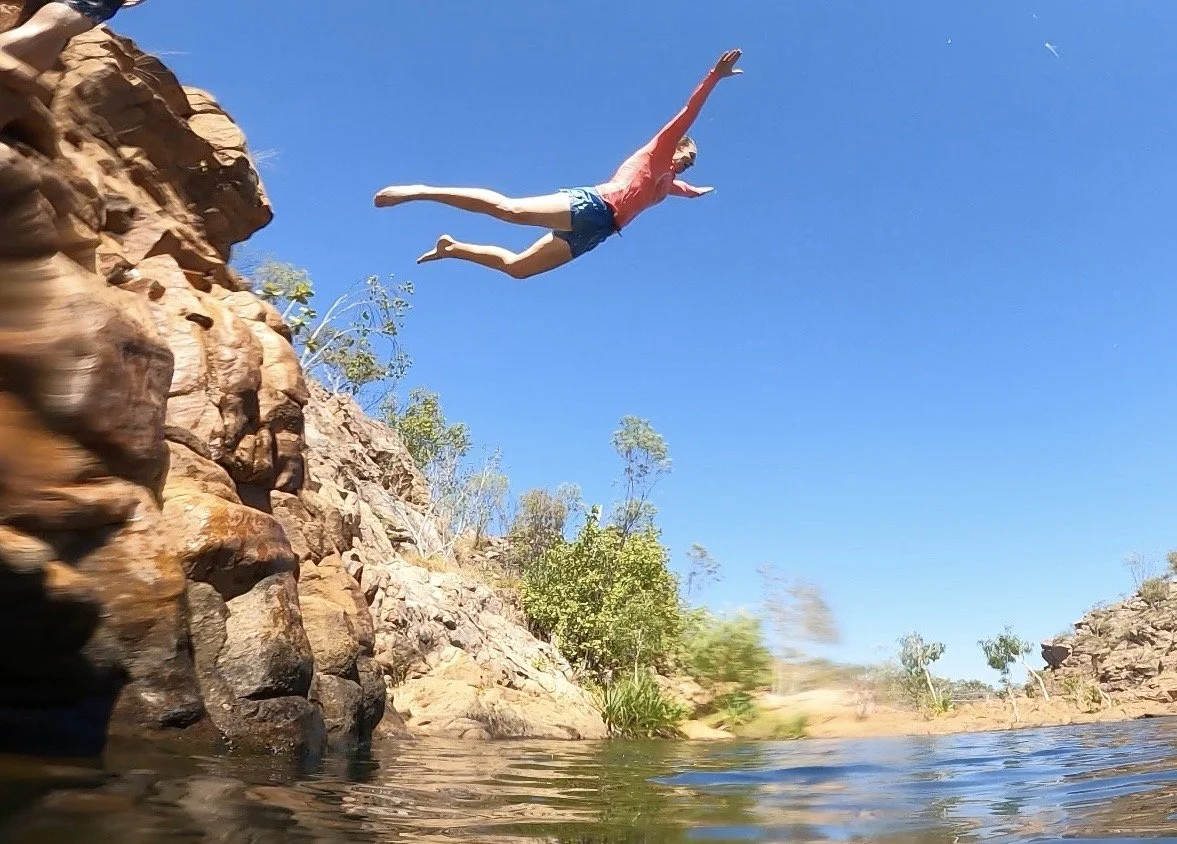
Ultimately though, we still need to create moments where we can revitalise. For me, it’s getting a swim each day and swimming away from the group, even for just a minute, or consciously soaking up the silence underwater while I’m down there.
We rarely get a full day off or a perfectly peaceful afternoon. Sometimes it’s a morning walk before everyone else is awake, a few quiet minutes with a coffee, meditation before bed or even just scrolling through photos from the day before and deleting the crap ones.
I also do sensory walks with my groups in certain places. I invite everyone to walk slowly and quietly, listening to the sounds, feeling the air on their skin and the ground beneath their feet. Obviously, we can’t make them shut up or go slow, but we can only ever control our own thoughts, actions and reactions.
A phone call to another guide and a vent session to get shit off your chest helps too. That friend is an important one. The one you text and say, “Got a few minutes so I can vent?” They call, listen, offer advice if you want it, or don’t if you don’t. Then, when you hang up, you feel lighter and return the favour some other day. To be clear, this friend needs to be a guide, no one else will truly understand!
Other times, it’s just remembering that this job is seasonal for a lot of us. That three months of hard work might give us three months of travel afterwards. We didn’t choose a 9–5 for a reason. We are, in many ways, a different type of human.
But we are still human.
We need rest and boundaries. We need food that isn’t just processed snacks and leftover group energy. We need time away from questions and being needed.
We also need to be wholeheartedly ourselves. Not some random mask we create who leads the walks, checks the time constantly, counts heads or explains when the next toilet stop will be. It’s so important to be yourself. Wholeheartedly, passionately you.
Pretending or wearing a work mask takes effort. Being me gives me time to relax.
I actually interviewed with Intrepid in London years ago and tried to be what I thought they wanted. It was the worst interview ever, and I didn’t get the job. The next day, I interviewed with Explore and consciously turned up as myself. I got the job. Guests want the real you, not a carbon copy of what you think you should be.
Being able to relax is a huge part of the job. For me, this can only come when I’ve read the notes, asked the questions, know the tour, ticked the boxes and am happy to admit when I don’t know something.
Saying that, I absolutely love to run tours blind, meaning being thrown into a tour I’ve never run before. I’m confident in my ability to tell stories and give interpretation along the way, but I’m also very happy to let guests know it’s my first time on a particular leg and that they’re in good hands. I trust myself, and I make sure I’m super organised and all over it.
On those tours, it may take a little longer for me to relax, but I can still be me at meal times, with a microphone at the front of the bus, or playing my music and having a no-interpretation drive for space and silence.
I also think it’s really important that we know our why.
Why did I choose this job? Why am I still doing it? Am I still happy?
Our whys can come in so many forms: freedom, people, change, nature, culture, adventure, connection, a lifestyle that doesn’t fit neatly inside four office walls, the chance to see people come alive, the privilege of sharing places we love. Without a why, guiding can become a slog. The long days feel longer, complaints feel louder, logistics feel heavier and the moments of daily magic become harder to notice.
When we know our why, we can always come back to it.
I initially started guiding in my early twenties, in those years when we can somehow run on whatever food we can get our hands on and adrenaline. I wanted to be paid to travel. I had been living out of my backpack for a couple of years and was loving it. I love language, culture and adventure, and I figured there must be a way for me to make money at the same time.
I got a job at Explore and started being flown around the world to take people on holidays. It was a hard slog. We ran tours back to back and only had time off when a trip was cancelled. But the tips were great, and although the pay was absolute shit, at the end of a season I had a lump sum of cash for my next adventure.
I eventually left guiding, taught swimming, worked with migrants and became a primary school teacher, amongst other things. Then post-Covid, my why became that I wanted to move somewhere else in Australia, but I didn’t know where.
I decided I may as well work around the country and see where I landed, rather than just choose a place at random and start doing the same shit I’d already been doing in Adelaide. Adelaide wasn’t bad, but I knew it was time for me to move on.
I made three calls, got three jobs and soon realised I could no longer run on “whatever food” and adrenaline. Those years are most definitely gone. I suppose the truth is, we don’t know what we don’t know. And knowing now how to get the most out of myself through nutrition, movement and good hydration, I needed to approach the job differently.
I got flown around the country to run trips and, after working in all states except Western Australia, I kept coming back to the Sunshine Coast. I also really love Northern NSW. There’s something about the rainforest meeting crystal-clear ocean and point breaks that called me.
To be honest, my why now is in transition, but that’s the beauty of a why. It can change direction as we do.
When I show up to work, I give my all. To do that, I also need fresh food, good water, electrolytes, walks, swims, quiet coffees and early nights. And on my time off, I recharge with yoga, writing, nature and downtime.
Being surrounded by people 24/7 is exhausting for everyone, and because of this, I respect my guests’ need for space, self-care and moments to recharge as much as I respect my own.
My welcome meeting talks about this. I talk to guests about self-care, taking space and doing their own thing when they can. I want them to feel connected, but not like they need to join in all the time if they don’t want to. I am fully present with my groups, but I create an environment of independence, not co-dependence. I don’t need to be needed when I don’t have to be.
I got asked what advice I would give to newer guides who may be struggling or burning out. I thought about it, and I think I’d say this:
Know your true self deeply.
Know your triggers, so you don’t blame guests or co-workers when you get shitty or frustrated about something.
Get to know your mind. Listen to the words you say to yourself, your friends and the group.
We get more of what we focus on. If you only focus on the problems, that’s all you’ll see. Focus on the beauty of the job and the people around you, and you’ll see more of that.
Create little moments each day for yourself. Know what fills your cup. It’s okay to have a solo ocean swim, an early night or to walk behind the group for some silence when you need it.
Understand what your body needs. It’s sending you hints all the time. Listen and respond with love, fresh food and movement when needed.
Besides the interpretation and the organisational skills of a small army, this job is about the people. Without them, we’d need to get real, and probably boring, jobs. So be grateful for them, and make an equal effort with each one, not just the ones you like.
Stay curious. Stay curious about those you meet, the places you go and the world that surrounds you.
Be interested. Don’t just try to be interesting. Everyone on the trip deserves the spotlight at some point.
Healthy boundaries are respected by guests. They already see how hard you work. You’re not there to prove anything. And if you think you are, maybe ask what you’re trying to prove to yourself.
You don’t have to be everything to everyone. Guests will take more and more if you keep giving.
Not everyone will get along. You don’t need to get involved or pick sides, but having the ability to listen and understand different perspectives will make all the difference. People need to be seen and heard.
Burning out doesn’t prove your worth. It just makes you feel shit and hate your life.
You don’t have to be available every second of the day to be a good guide. Set boundaries, but be flexible, because stuff will always happen when you least expect it. And that’s okay. The sun will rise again tomorrow.
You don’t need to know everything. Good guides have different passions. We all tell stories differently. We’re not expected to know everything about everything. That’s insane. Knowledge and stories come with time. Be okay with not knowing. Find out the answers when guests stump you, and then you’ll know for next time. Win-win. You learn, they learn.
Anyway, have fun and look after yourself like you are part of the trip.
Because you are.